



Media Center > Story
How Global UGRAD alumni are promoting American English and values around the globe
April 20, 2026
By Abby Henson
English is the language of global opportunity, and teaching it is one of America’s most powerful tools for building lasting partnerships around the world. As the primary language of international business, higher education, and diplomacy, English proficiency connects people to American ideas, institutions, and values—creating allies, trading partners, and lasting advocates for the United States.
Academic exchange programs sponsored by the U.S. Department of State actively advance English language learning as a key strategy to strengthen economic development, extend American values, and cement the United States’ reputation as a global education leader. Through one such program, the Global Undergraduate Exchange Program (Global UGRAD) implemented by World Learning, students from around the world come to U.S. colleges and universities for one transformative semester—immersed in American English, educational methodologies, and the culture of curiosity and initiative that drives U.S. success.
The impact extends far beyond the program itself. Armed with new skills and a new perspective on teaching and learning, Global UGRAD alumni have returned home to build schools, redesign classrooms, and expand access to English education across their communities—creating economic opportunity and strengthening ties to the United States in the process.
“Many of my students come from backgrounds with limited resources, so learning English can become a powerful tool for improving their future and contributing to the economic and social development of our country.” -Karen Salvador Argueta, Global UGRAD, 2022
One of those alumni is Carolina Carrillo. In rural Costa Rica, students in small, geographically isolated schools have long had little to no access to quality English instruction—a gap that limits their economic prospects before they ever enter the workforce. Carrillo is working to change that.
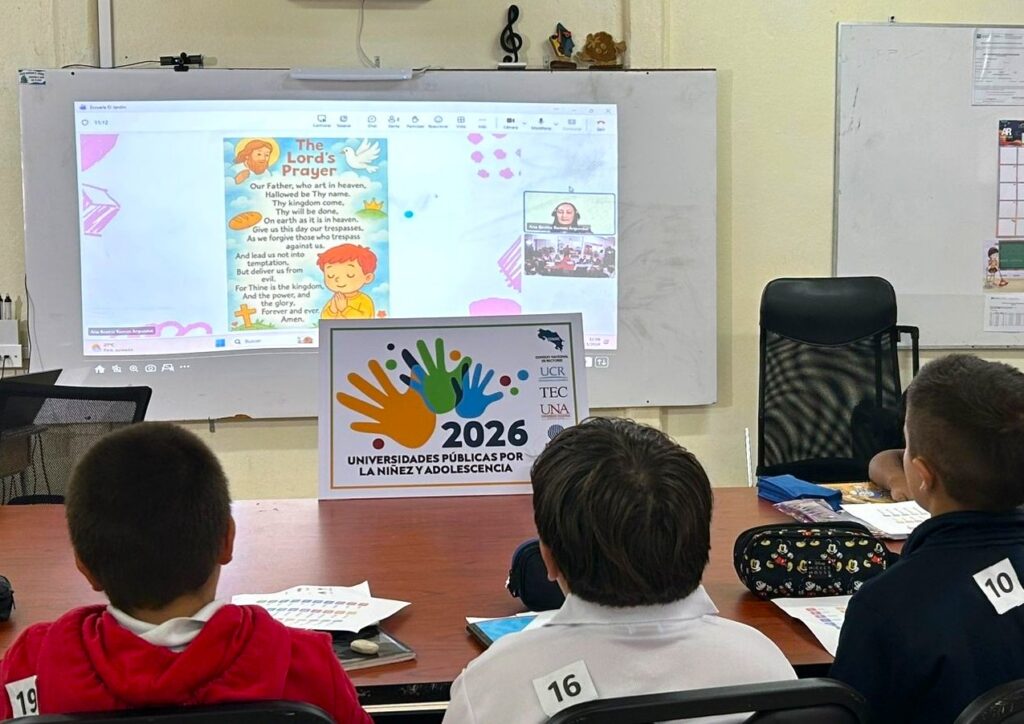
A faculty member at the Universidad Nacional of Costa Rica, Carrillo coordinates the bachelor’s program in teaching English for primary education. Drawing on the innovative, student-centered approach she experienced during her Global UGRAD semester, she now uses videoconferencing and interactive classroom technology to connect qualified English teachers with students in remote single-teacher schools—in partnership with Costa Rica’s Ministries of Public Education and Science, Innovation, Technology, and Telecommunications.
Carrillo says that many sectors of her country’s economy, such as tourism, technology, and international services, depend heavily on English communication, but many rural areas still experience challenges with accessing quality English education. Her work focuses on helping reduce these educational gaps by exploring innovative models that allow students in these communities to access professional English instruction.
“English proficiency is increasingly important in today’s global society because it opens doors to higher education, international collaboration, tourism, and employment opportunities. In the case of Costa Rica, the close economic, cultural, and diplomatic ties with the United States have made English especially important for professional development and economic growth,” Carrillo says.
Regarding her own professional development, Carrillo remains “deeply grateful” for the way the Global UGRAD Program shaped her career journey.
“Being able to study, live, and interact in English every day—while also experiencing the culture, climate, and social environment of the United States—was extremely valuable. It helped me strengthen my language skills while also developing a deeper understanding of how language and culture are closely connected,” she says, noting that for someone who would later dedicate her career to training future English teachers, this experience was “particularly meaningful.”
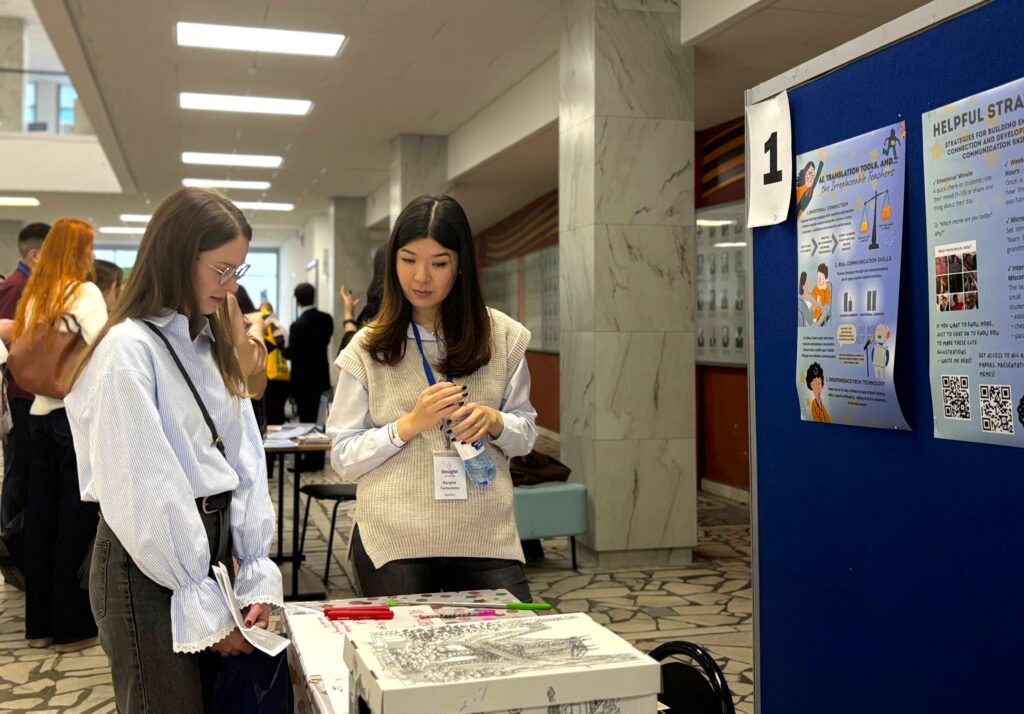
Nargisa Tursunova also stresses that her time in the Global UGRAD Program was formative in shaping her career in English-language education.
“I studied language teaching and observed how instructors engaged with their students in a totally different way from the traditional model of education I grew up with in Tajikistan. We would receive topics to prepare before class, and then discuss, debate, and share our perspectives openly. Our instructors guided and encouraged our curiosity rather than simply delivering information,” she says. “Global UGRAD gave me a new way of seeing teaching. It shaped how I learn independently, how I search for and evaluate information—skills that were essential when I later built my school.”
Tursunova started and runs an online school, teaching English to students from Tajikistan, Kazakhstan, Germany, Russia, Estonia, Lithuania, and Japan. She also leads training sessions for English teachers, sharing modern teaching strategies, and frequently speaks at conferences on topics such as how to avoid teacher burnout and how to remain relevant as an educator in the age of AI.
She has also conducted several workshops at American Space Khujand, part of the U.S. Department of State’s global network of centers connecting communities to American education, culture, and values.
“I was impressed by how much American education emphasizes reading and researching across different subjects. I motivate my students to read, research, and become more independent learners, just as I experienced during my time in the program.” -Karen Salvador Argueta
To advance her own career, she attended the Teaching English to Speakers of Other Languages (TESOL) International Conference in California last year. She is now planning a joint online teaching project with colleagues she met there.
“English is the language of opportunity and networking. I have built an online school that creates real economic opportunity. My teachers work remotely, across borders, with above-average compensation,” she says, noting her drive to start the school was inspired by lessons learned from the Global UGRAD Program.
“One thing that stood out from the program was the emphasis on initiative and self-direction. Students were expected to take ownership of their learning. I was used to a system where the path was clearly laid out. In the United States, curiosity and proactiveness were not just welcomed, but encouraged.”
When Karen Salvador Argueta returned to El Salvador after her Global UGRAD semester, she brought with her a fundamentally different vision of what education could look like.
“Beyond the academic knowledge I gained, I learned a great deal about the American education system. I was impressed by how much American education emphasizes reading and researching across different subjects. I motivate my students to read, research, and become more independent learners, just as I experienced during my time in the program,” she says.
“Global UGRAD gave me a new way of seeing teaching. It shaped how I learn independently, how I search for and evaluate information—skills that were essential when I later built my school.” -Nargisa Tursunova, Global UGRAD, 2017
Salvador Argueta teaches at the Charlie Foundation, an organization in El Salvador focused on education and youth development, particularly English-language training. She specializes in helping students prepare for standardized exams such as the Test of English as a Foreign Language, which assesses English proficiency in an academic setting.
“Through my work, I help students develop the language skills they need to apply for scholarships, international exchanges, and professional opportunities that they might not otherwise have,” she says. “Many of my students come from backgrounds with limited resources, so learning English can become a powerful tool for improving their future and contributing to the economic and social development of our country.”
Carrillo, Tursunova, and Salvador Argueta represent a growing global network of Global UGRAD alumni who are transforming English education—creating opportunity in their own communities while advancing the partnerships, shared values, and mutual prosperity that reinforce America’s global leadership.