



Media Center > Story
Global UGRAD: Building America’s future partners
October 10, 2025
The Global Undergraduate Exchange Program (Global UGRAD), funded by the U.S. Department of State and administered by World Learning, represents a strategic investment in America’s long-term economic and diplomatic interests. The program brings emerging student leaders from around the world to U.S. colleges and universities for one semester of non-degree academic study, combined with community service and professional development. Through this experience, participants build enduring networks with U.S. institutions, companies, and peers that establish the United States as their preferred partner as they become international decision-makers in business and government.
During their semester in the United States, Global UGRAD participants gain firsthand exposure to American professional practices, build networks with U.S. organizations and companies, and learn about democratic institutions. They develop an understanding of how U.S. systems operate—from private sector innovation to public policy—all of which shape how they approach leadership when they return home.
“I aim to help organizations adopt quality management systems that align with international standards and support their growth…By combining the standards I learned at University of Wisconsin–Stout and my experience, I hope to contribute to advancing quality practices in local industries.”
As these individuals advance in their careers in business, technology, finance, healthcare, and government sectors, they become natural advocates for U.S. partnerships, whether as entrepreneurs, corporate leaders, policymakers, or civil society innovators.
This strategic impact is already visible in the trajectories of Global UGRAD alumni—from understanding American governance systems to championing U.S. business models and standards in their home countries to establishing U.S.-style professional organizations abroad.
Four alumni reflect on their experiences:
Championing U.S. business models in Cambodia’s finance sector
Muylin S., Cambodia | Grand Valley State University; Allendale, MI
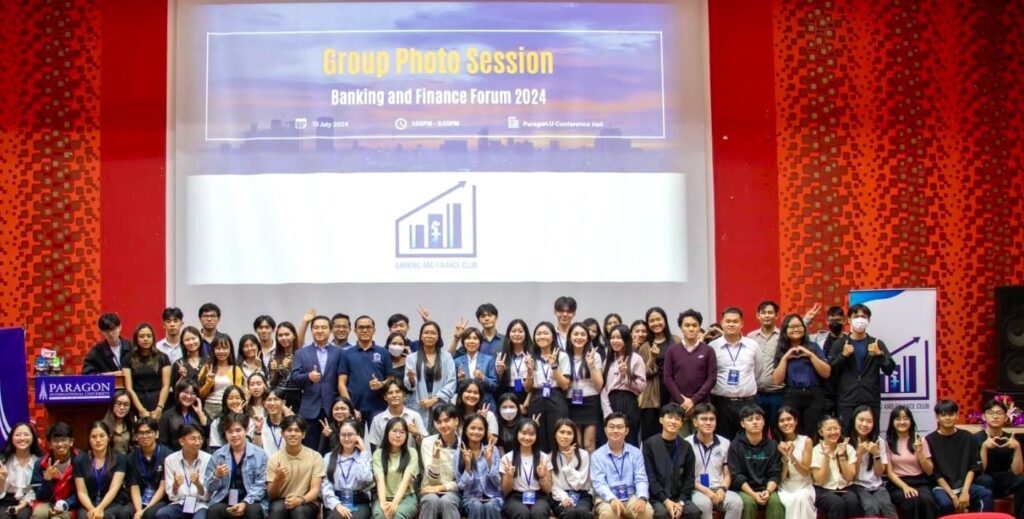
“Inspired by my membership in the Seidman Investment Portfolio Organization (IPO), a student organization at Grand Valley State University, I co-founded the ‘Paragon Banking and Finance Club’ with my fellow classmates. This is the first-ever student organization for the banking and finance department. Seeing firsthand the professionalism and career-readiness of U.S. students at Seidman IPO led me to develop the same for my peers in Cambodia. Working together with four co-founders and five core teams, we have successfully completed a multitude of events, trainings, and hands-on experiences, including internal training sessions, sharing sessions, site and company visits, and a poster contest on financial literacy, and we successfully hosted the ‘Beyond Traditional Accounting and Finance Roles Forum.'”
Aligning international industries with U.S. quality standards
Lina D., Egypt | University of Wisconsin-Stout; Menomonie, WI
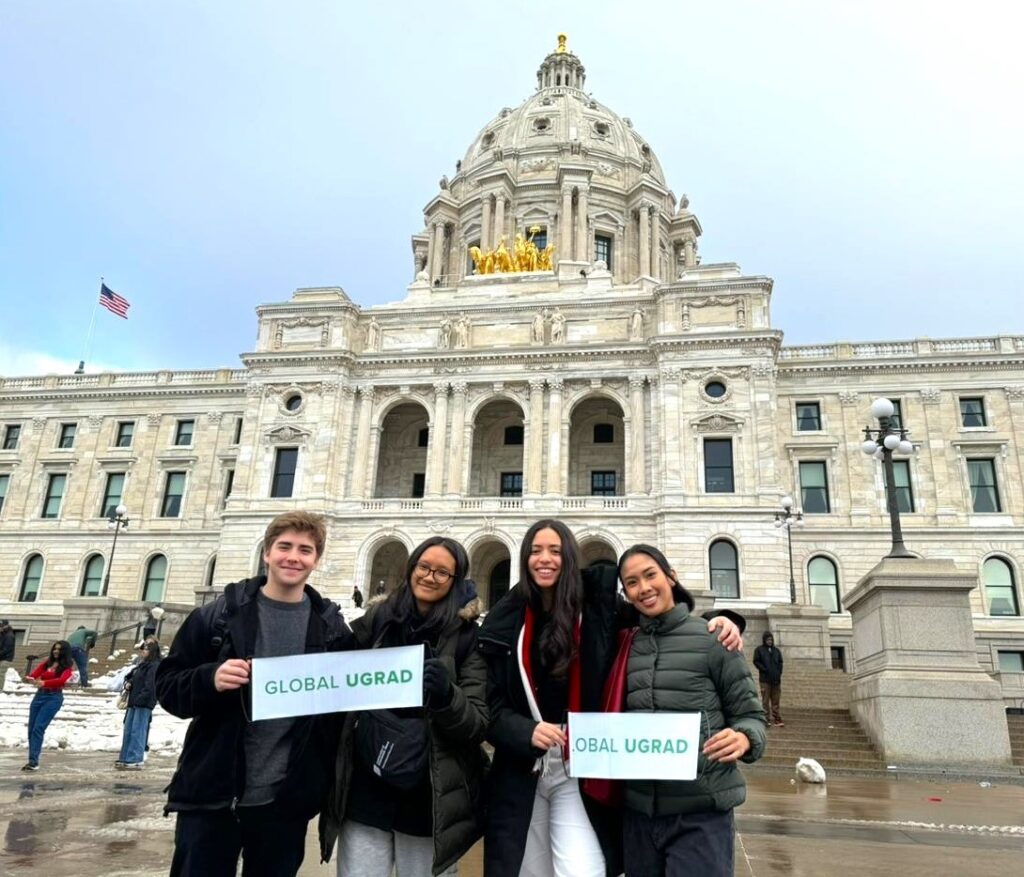
“When I was on my exchange semester at UW–Stout, I registered for a Quality Management course. As an industrial engineering student, I knew that applying high standards of quality is crucial for a company to grow. In the course, I learned about the Baldrige Excellence Framework and was fortunate to lead a group project where we audited the quality system of a well-known construction company in the Midwest. Since that project, I have been very interested in shifting my studies and career toward the quality management track. I was accepted into an internship at Prometeon Tyre Group [in Egypt] in the Quality Management System department as a Quality Engineer, and they extended my internship period until graduation so they could officially hire me. I still apply the principles and techniques I learned at UW–Stout. My manager noticed that I used a methodology that had not been used before, so he assigned me to lead the company’s International Automotive Task Force recertification process, where I served as the auditee. All of this was possible thanks to the encouragement of my UW-Stout professor, Kevin Wilkinson, who believed in me and motivated me.
After I graduate, I am considering starting my own engineering consultancy business with one of my professors in Egypt to promote the Baldrige Framework methodology among small local businesses and companies. Through this, I aim to help these organizations adopt quality management systems that align with international standards and support their growth. I am taking this step as part of my long-term goal to become an international quality auditor. By combining the standards I learned at UW–Stout and my experience, I hope to contribute to advancing quality practices in local industries.”
Understanding American government and civic leadership
Urick Y., Papua New Guinea | University of Central Missouri; Warrensburg, MO
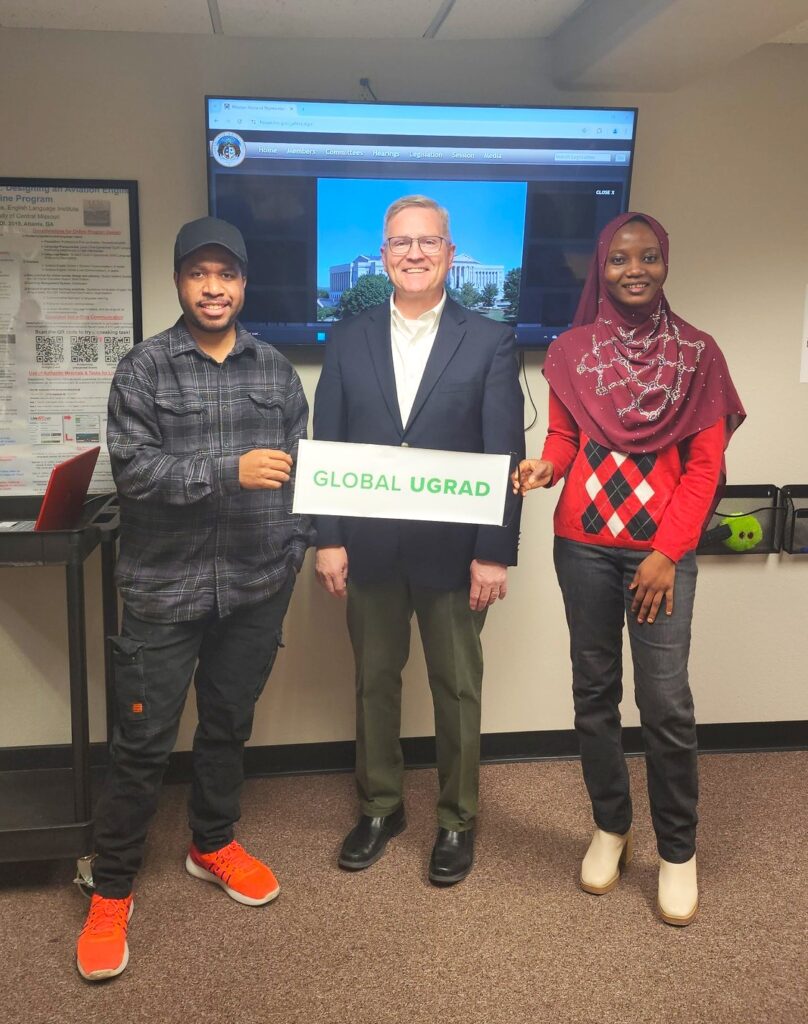
“The University of Central Missouri’s English Language Institute hosted an engaging Q&A session with former Missouri State Senator David Pearce. He shared valuable insights into state government operations, including how policies are developed, the legislative process, and the challenges and responsibilities of public service. One of the key takeaways from the session was the importance of civic engagement and staying informed about government decisions that impact our communities. It was a fantastic opportunity to learn directly from someone with firsthand experience in shaping public policy. Events like these remind us of the importance of being proactive citizens of our country and broadened our understanding of how American government functions.”
Partnering with U.S. institutions to drive economic development
Lenny G., El Salvador | Bluefield State University; Bluefield, WV
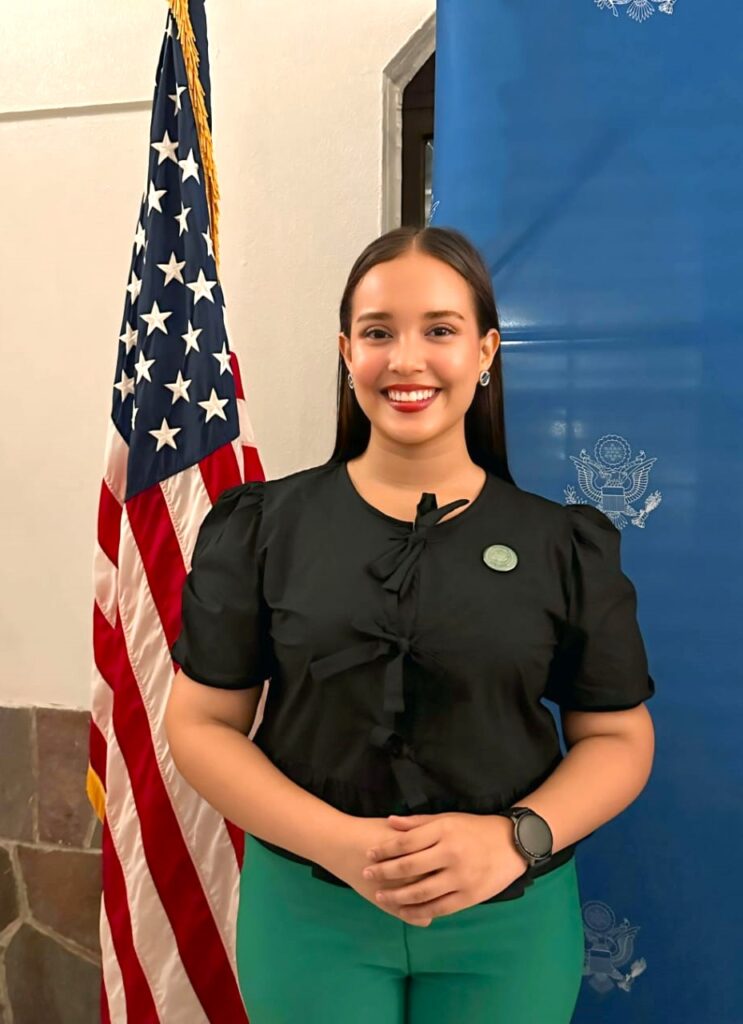
“Thanks to the networking opportunities I have had as an exchange alumna with the United States Embassy in El Salvador, I work as a Content Reporting Specialist for Un Pulmón Más, an organization that promotes the orange (creative) economy in my region in cooperation with the Center for International Private Enterprise. This role allows me to collaborate on creative development projects in El Salvador and participate in local and regional events. One of the most enriching experiences since my return has been volunteering. I am still active in my church and in the Oportunidades program as a volunteer in educational and workforce readiness activities. I also recently began participating in the GIZ CaPaz II project, a German initiative that supports young people in the search for decent jobs in El Salvador.”