




Media Center > Story
From Global UGRAD to Google: How Elsie Christine Awuor is driving American innovation across Africa
August 12, 2026
By Abby Henson
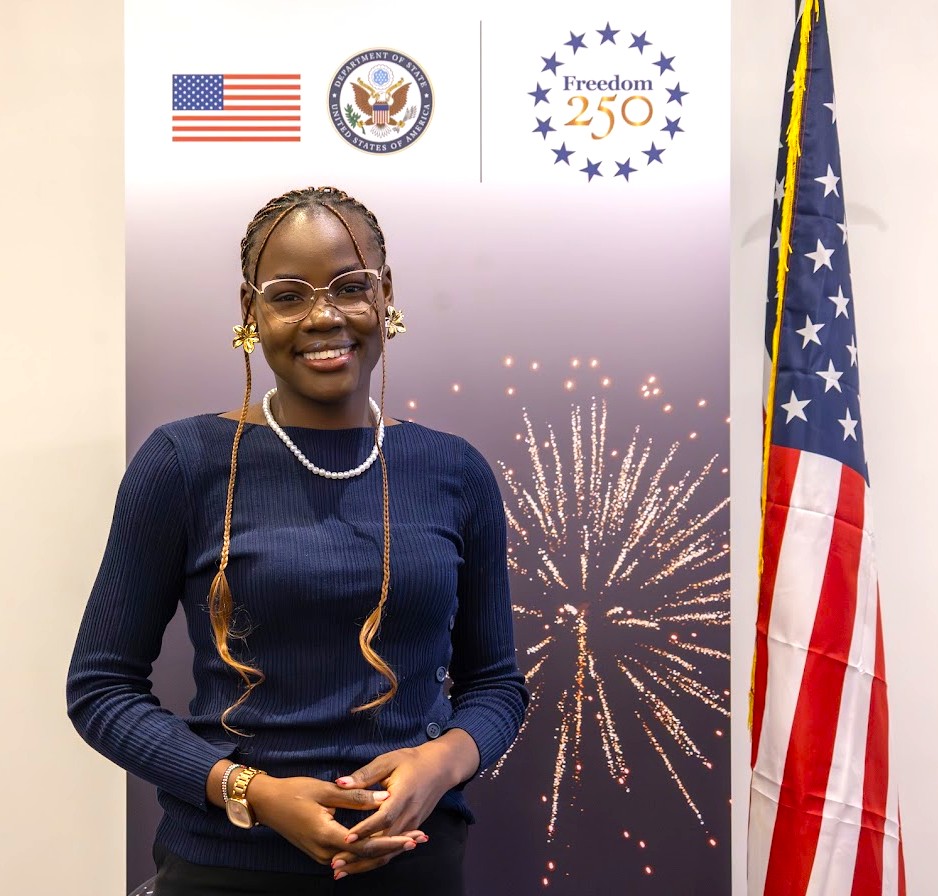
When Elsie Christine Awuor left Kenya for a semester at the University of Wisconsin–Green Bay in 2022 through the U.S. Department of State’s Global Undergraduate Exchange Program (Global UGRAD), she expected to earn credits, build her resume, and get a firsthand look at American campus life. What she did not anticipate was how profoundly the semester would reshape the way she works, leads, and innovates years later.
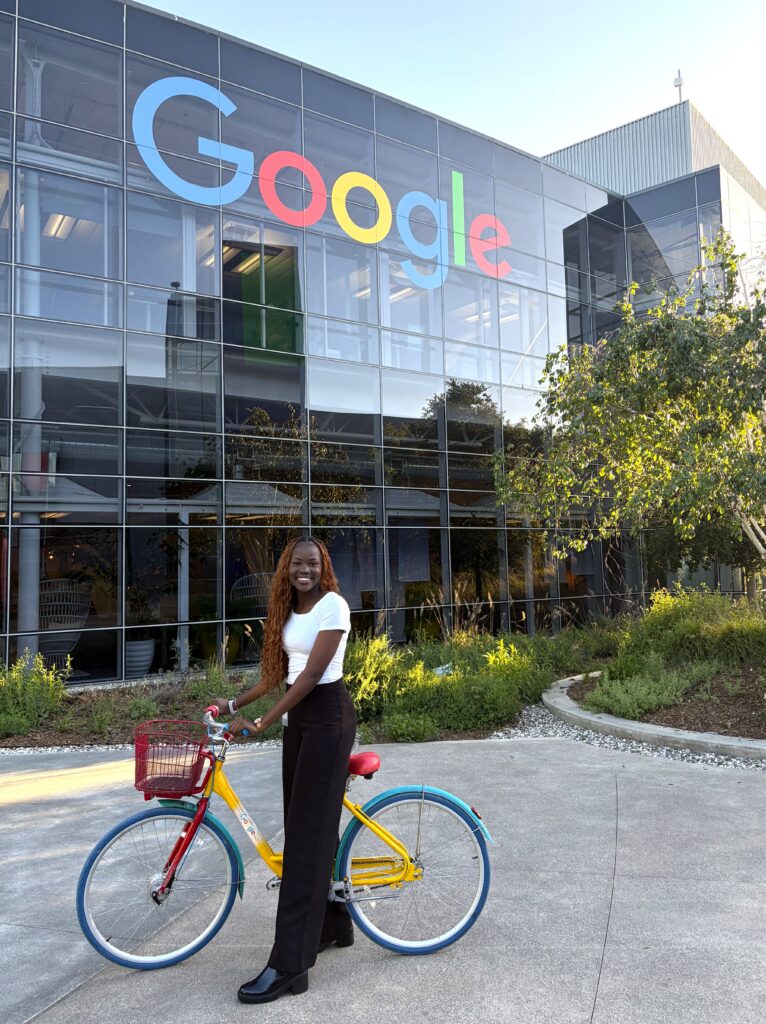
Today, Awuor is an associate product marketing manager for Google’s Gemini, where she drives regional AI adoption through localized marketing strategies across Sub-Saharan Africa. She orchestrates cross-functional campaigns and tracks their performance, with a focus on reaching youth and the “digital-first demographic.”
Working with teams and communities throughout Africa, she connects young people to Google’s cutting-edge technologies and software while building partnerships that strengthen digital literacy and innovation across borders. This includes helping spearhead hands-on workshops and Safaricom De{C0}de, an annual developer-driven engineering and technology summit held in Kenya.
Awuor says that UW-Green Bay’s “world-class facilities” and the array of software applications students were exposed to all aligned to form a unique “tech ecosystem” on campus.
She credits many of the skills she uses daily in her work to her Global UGRAD semester. The program, implemented by World Learning, brings students from around the world to U.S. colleges and universities for one semester of academic study, professional development, and community service. Participants gain skills that often lead to tech careers, expand their professional networks, and strengthen their ties to the United States. This, in turn, advances U.S. foreign policy by establishing strategic partnerships and fostering economic growth and stability worldwide.
Discovering America’s Maker’s Mindset
One of the most enduring American values Awuor took home from Global UGRAD was a “maker’s mindset” — a creative approach to building something new.
“A maker’s mindset is fundamentally about shifting from being a passive consumer of information or technology to an active builder, problem-solver, and creator,” she says. “It embraces curiosity, resourcefulness, and a bias toward action, treating challenges as design problems waiting to be solved.”
During a collaborative project at UW-Green Bay, Christine and her classmates were challenged to address a local community need with limited resources and tight deadlines.
Rather than “getting bogged down by traditional bureaucratic planning or a lack of upfront funding,” her team used a “rapid-prototyping approach” to build a grassroots mockup of a digital resource-sharing hub. They used design thinking to clarify challenges, mapped ideas on whiteboards, tested concepts directly with fellow students, gathered immediate feedback, and refined their solution through iteration.
“That American bias toward action, focusing on building a working prototype and learning by doing rather than just theorizing, completely transformed how I approach complex marketing campaigns and product launches today,” Awuor says. “Rather than waiting for permission or the perfect conditions, someone with a maker’s mindset experiments rapidly, iterates based on feedback, and builds tangible solutions with whatever tools are at hand.”
The maker’s mindset grew out of a defining feature of the American education system: an emphasis on experiential learning.
“One of the most striking aspects of the American system was the shift away from purely rote memorization toward practical, hands-on application,” says Awuor. “Professors acted more as facilitators or mentors rather than distant lecturers, and active participation, debate, and questioning were strongly encouraged. Students were expected to challenge ideas constructively, defend their positions, and collaborate across perspectives.”
Awuor adds that UW-Green Bay’s “world-class facilities” and the array of software applications students were exposed to all aligned to form a unique “tech ecosystem” on campus. Add to this the flexibility to connect ideas across disciplines—whether by combining technology with business strategy or community engagement—and Awuor says her Global UGRAD experience was extremely formative in her career development and in how she works, leads, and collaborates in her job today.
Building Partnerships, Advancing American Leadership
Awuor sits “at the intersection of technology and AI” and believes her work executing go-to-market strategies for Gemini across Africa is fundamentally creating long-term economic opportunity both locally and in the United States.
“By bringing cutting-edge technology closer to youth, digital-first demographics, and local creators, I help accelerate digital fluency and equip the next generation of African professionals, entrepreneurs, and students with the collaborative tools they need to innovate, scale businesses, and solve uniquely local challenges,” she says.
“My time as a Global UGRAD student exposed me to several key American cultural values, operational methodologies, and collaborative practices that continue to shape how I think, lead, and execute today.”
At the same time, her work advances American leadership by building strategic partnerships that extend the reach and competitiveness of U.S.-developed innovation.
“I help strengthen cross-functional and cross-border partnerships, bridging global product development with vibrant regional insights from South Africa, Kenya, and Nigeria,” says Awuor.
This ensures that American AI technologies are continually relevant and positioned to compete effectively in rapidly growing markets, as well as creates new opportunities for American companies.
The Lasting Impact of Global UGRAD
Awuor’s experience is a reminder that one semester can shape a career for decades.
She continues to build on the lessons she learned in Green Bay by connecting American mindsets, practices, and technology with new users in strategic areas, fostering international partnerships and economic growth across continents.
“My time as a Global UGRAD student exposed me to several key American cultural values, operational methodologies, and collaborative practices that continue to shape how I think, lead, and execute today.”