



Media Center > Story
Global UGRAD alumni seminars promote American values and lasting partnerships in key regions of the world
January 6, 2026
By Abby Henson
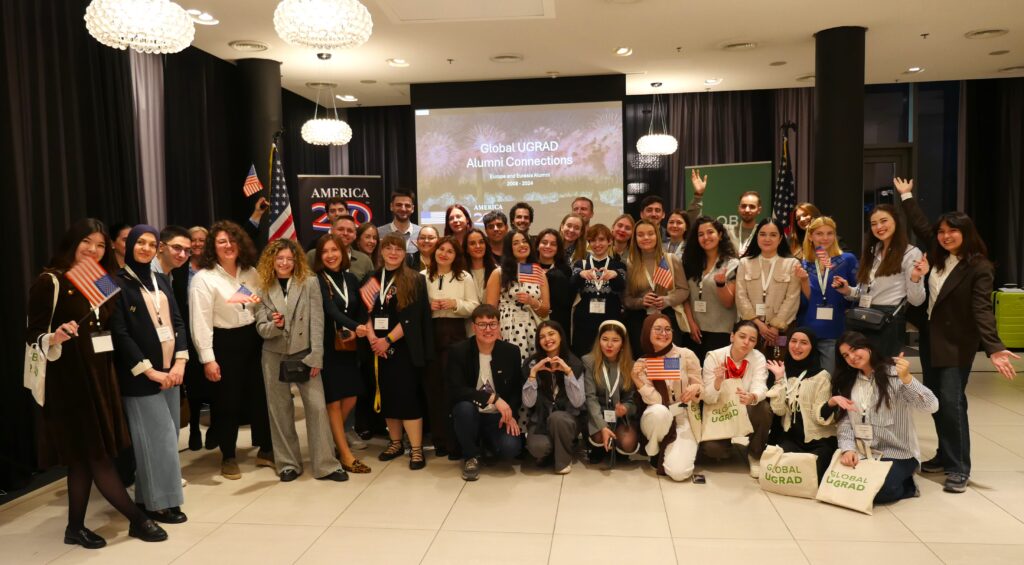
In commemoration of the 250th anniversary of America’s independence this year, the Global Undergraduate Exchange Program (Global UGRAD) recently hosted two seminars for alumni in Panama and Georgia. Both events, titled “America250: Global UGRAD Alumni Connections,” centered on “America250,” a national initiative honoring the United States’ rich tapestry of history, culture, and values.
The seminars showcased America’s significant contributions and global impact on the international stage and allowed alumni to explore the enduring principles of democracy, innovation, and civic engagement that have shaped both American society and international partnerships. Sponsored by the U.S. Department of State’s Bureau of Educational and Cultural Affairs, the America250 seminars also underscored the United States’ commitment to fostering lasting partnerships in key global regions and aimed to promote regional stability, diplomatic ties, and democratic values.
Held in October and implemented by World Learning, the events convened nearly 100 emerging leaders, professionals, and experts for a week of constructive panels, workshops, and networking. All attendees were alumni of Global UGRAD, a program that brings students from around the world to U.S. colleges and universities for one semester of non-degree academic study, combined with community service and professional development. At the Panama City seminar, alumni hailed from nine Latin American and Caribbean countries. Sixteen different countries across Europe, Eurasia, and Central Asia were represented at the Tbilisi event.
Sessions such as “Stars, Strips & Service” centered on ways to promote locally-driven solutions, while “Innovation Across Borders: UGRAD Alumni and the Spirit of America250” included breakout sessions focused on alliance-building and networking, digital storytelling, and public-private partnerships. For the workshop “Bringing America250 Home: Community Project Development,” teams of alumni identified community needs and developed solutions to strengthen community resilience and self-reliance, drawing on their professional experience and lessons learned throughout the week.
Both seminars also addressed a wide range of contemporary challenges critical to U.S. foreign policy. Panel discussions offered new insights and actionable ideas on topics including economic resilience, public policy, and diplomacy. Participants gained innovative career ideas, expanded their professional networks, and further cemented ties to the United States.
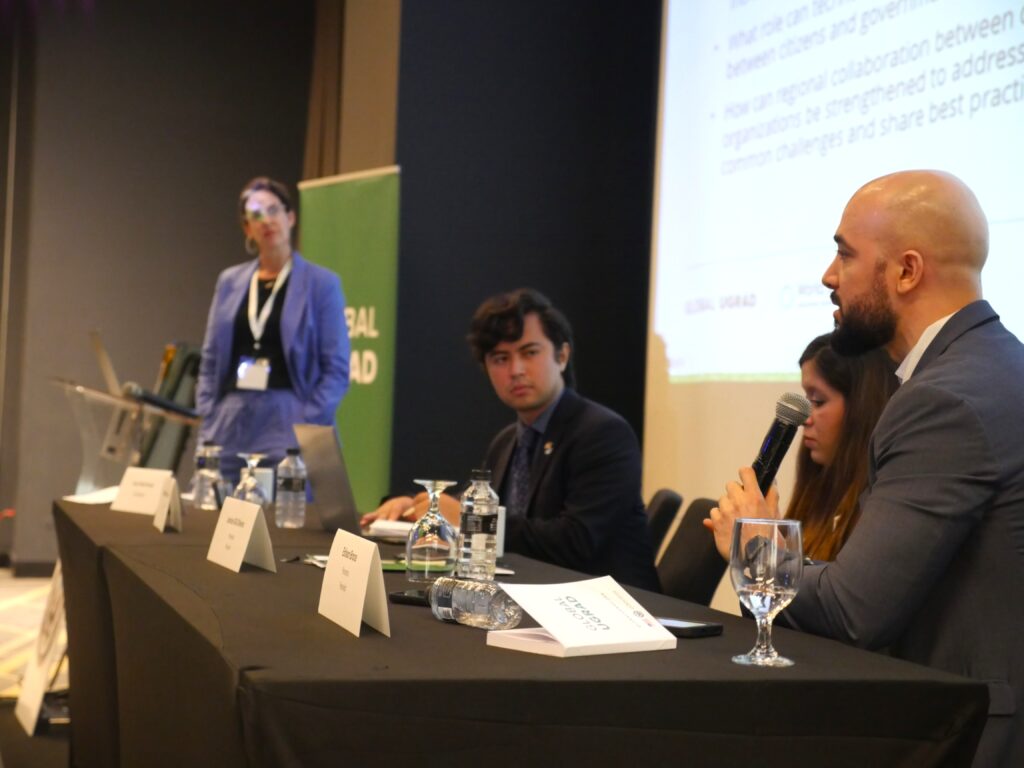
Edison Broce, speaker on the panel “America250: Celebrating Civic Leadership and Community Engagement,” is a lawyer and former member of Panama’s Parliament, as well as the author of five national laws on natural resource matters and institutional innovation. He participated in the Global UGRAD Program at the University of Alabama in 2010, which he credits with inspiring his career.
“My UGRAD experience was the first time I had direct exposure to the U.S. system of government and the historical principles behind it. Courses such as American Government, International Relations, and Comparative Politics helped me understand the strength of U.S. institutions, the value of constitutional balance, and the central role of civic participation in shaping public decisions,” Broce says. “UGRAD was a defining moment that shaped my academic path and ultimately led me to specialize in public policy and later serve in Panama’s National Assembly.”
Broce says the Global UGRAD Program also inspired his research in natural resource management, which is critical in the Latin American and Caribbean region.
“Panama relies directly on the stability of its natural resources, including the water systems that support the Panama Canal… Supporting that leadership helps create long-term conditions that matter not only for Panama’s development, but also for countries like the United States that depend on the Canal [for economic security.]”
Esli Alejandra Avendano, a facilitator for the session “Innovation Across Borders: UGRAD Alumni and the Spirit of America250” at the Panama seminar, describes her career as sitting at the intersection of education, entrepreneurship, and community development. As a Global UGRAD student at Saint Catherine University in Minnesota in 2017, she witnessed firsthand how Americans embrace volunteerism, innovation, and problem-solving, which played a transformative role in her future path.
“I was inspired by how deeply community engagement is integrated into academic and professional life, and the entrepreneurial, ‘solution-oriented’ mindset encouraged me to design programs for youth empowerment,” she says.
Alejandra Avendano went on to found PENTHA, an English academy and entrepreneurship hub in Guatemala that creates employment opportunities and promotes growth in emerging markets. She is also the program director for the English Language Programs in Alta Verapaz, funded by the U.S. Embassy.
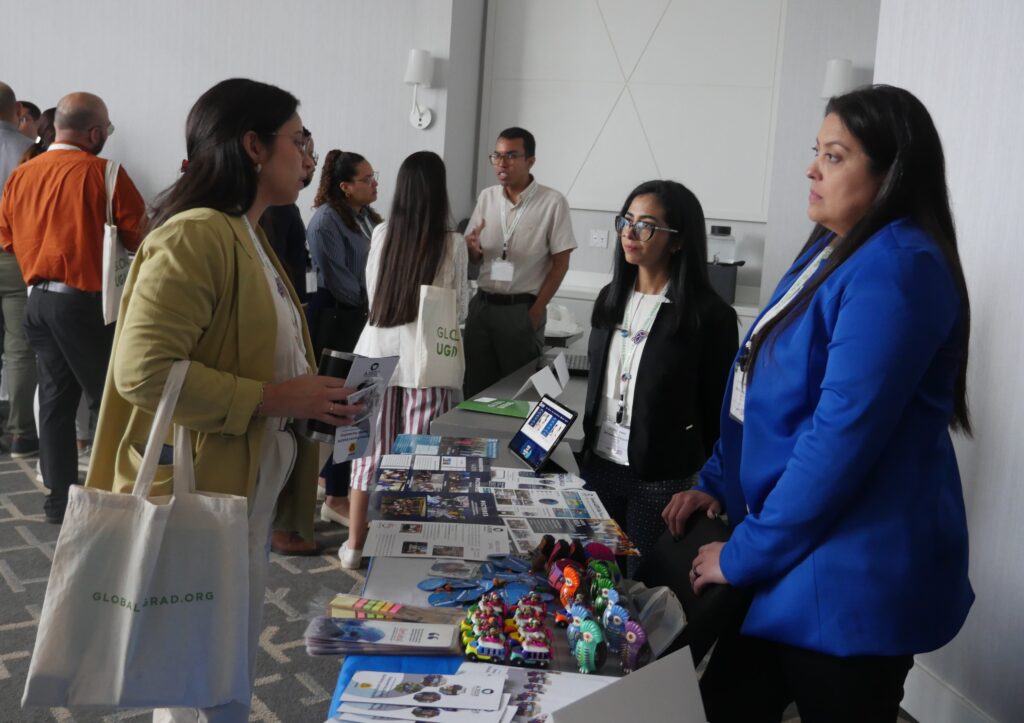
By improving a community’s economic resiliency through job training and growth, individuals have greater opportunities to thrive within their home communities.
“My work focuses on strengthening human capital, expanding access to education, and creating pathways to economic opportunity,” she says. “Through the PENTHA Market, we support rural producers by connecting them to broader markets, strengthening their income and long-term stability.” She adds that these broader markets include organizations in the United States interested in Guatemalan coffee, cacao, and artisan goods.
At the Georgia seminar, Nilufar Murodova was a facilitator for the “Innovation Across Borders: UGRAD Alumni and the Spirit of America250” session. She is a contractor for the international tech company A1 Project and the co-founder of iCode, an information technology accelerator in Tajikistan. Operating in three cities and having trained more than 200 Tajikistani youth, iCode expands economic opportunities and builds a stronger pipeline of young people entering Tajikistan’s tech sector.
Murodova also served as the director of American Space Dushanbe, a U.S. Department of State-sponsored educational center in Tajikistan. Throughout her career, she has developed programs that reach thousands of young people and strengthen U.S.–Tajikistan collaboration in STEM—something she believes has a far-reaching impact on security and stability in key regions of the world.
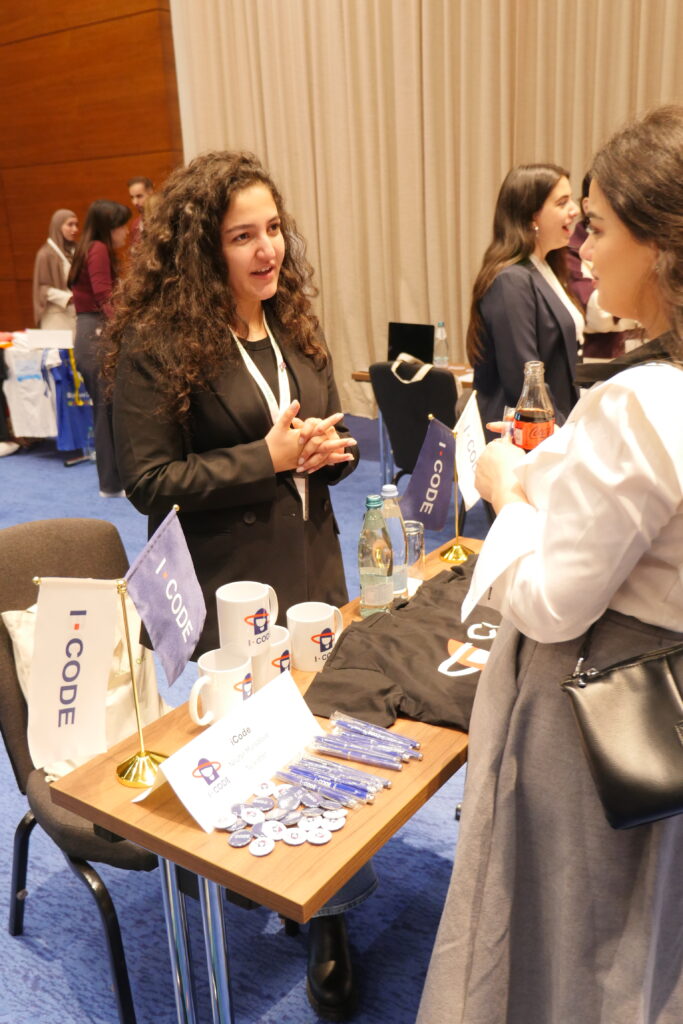
“U.S.–Tajikistan collaboration in tech and innovation strengthens long-term stability, resilience, and positive engagement in a strategically important region of Central Asia, which directly affects broader Eurasian security dynamics,” she says. “By investing in education, innovation, and skills development, the United States helps create economic opportunity and credible career pathways for young people, reducing the appeal of instability, extremism, and outward migration driven by lack of opportunity.” She notes that this collaboration in technology supports a forward-looking mindset in a region that is integrated into global innovation ecosystems led by the United States.
“That cooperation reinforces U.S. leadership in technology and innovation by promoting American educational models, problem-solving approaches, and ethical standards in emerging technologies.”
Murodova says the Global UGRAD Program also strongly showcases America’s innovative spirit.
“What inspired me most [when I was a Global UGRAD student] was the culture of innovation and technology, where new ideas are encouraged, creativity is valued, and people are empowered to turn ideas into real solutions. I loved that my opinion mattered and support was always available when needed,” she says of her time at California State University, Bakersfield, in 2019.
Both seminars culminated in a session titled “America250 Innovation Showcase: Sparking Change Together.” Alumni teams presented community project ideas, which they had worked on throughout the week, demonstrating how American values of entrepreneurship, volunteerism, leadership, resilience, and democratic participation can inspire global innovation. The America250-themed projects addressed critical topics such as youth engagement, cybersecurity, and technology, connecting the spirit of American ingenuity to solutions for today’s challenges.
As these alumni return to influential positions in their home countries—from national parliaments to entrepreneurship hubs to tech companies—they carry with them a deep understanding of American values and a commitment to partnerships that advance U.S. interests. Through programs like Global UGRAD, the United States continues to build the international networks essential to maintaining American security and prosperity.